


Beyond the Briefcase
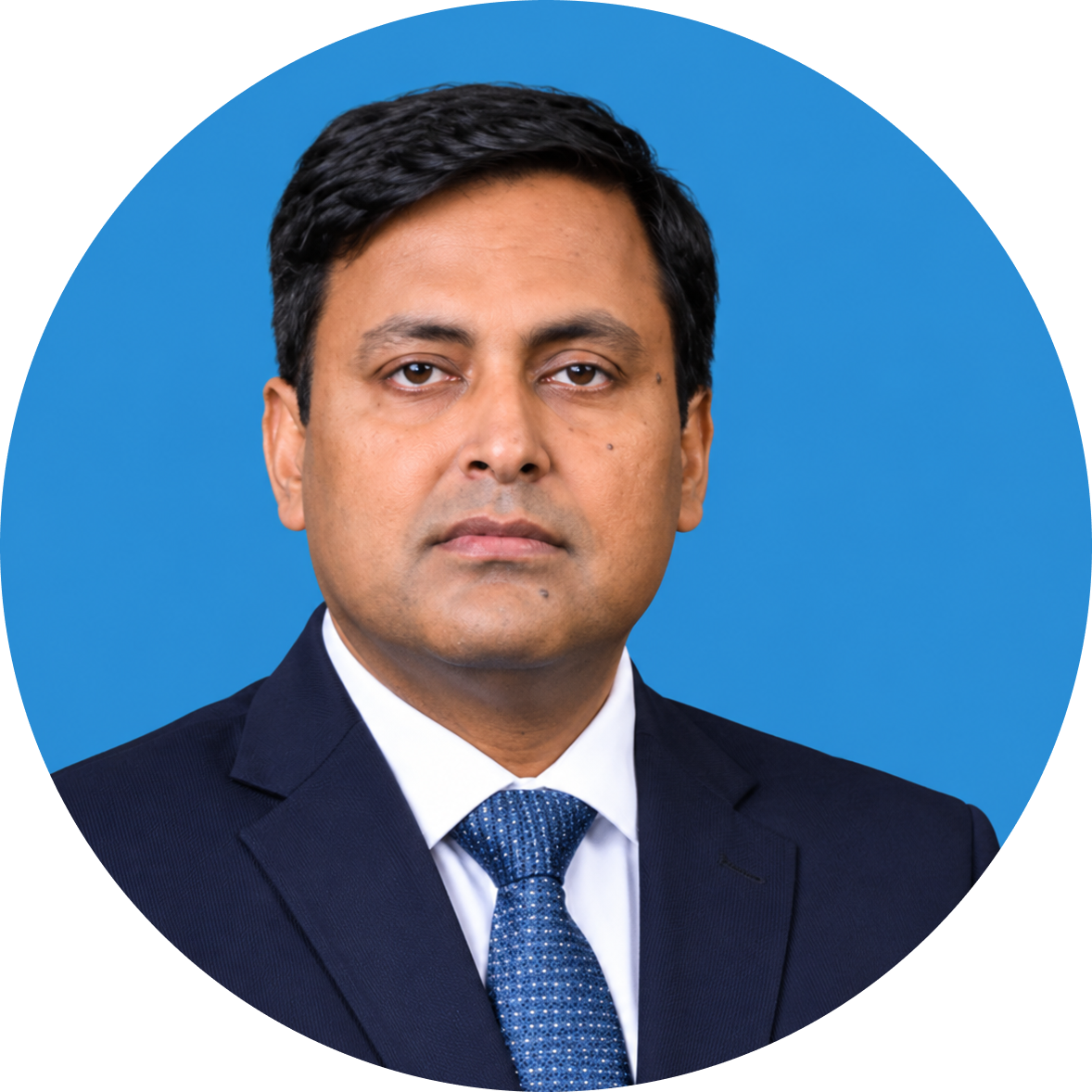


Capt. Amit Singh,
Head of Business and Director, South Asia & Middle East
South Asia and the Middle East are changing quickly. Energy flows are becoming more complex, India is emerging as an increasingly important automotive export market, and demand for logistics and warehousing continues to grow. For Capt. Amit Singh, Head of Business and Director, South Asia & Middle East, these shifts represent significant opportunities—but capturing them will require more than business growth alone. It will require strong local capabilities, collaboration across businesses, and the next generation of leaders.

A Region Positioned for Growth
South Asia and the Middle East have emerged as some of the most strategically important markets for the maritime and logistics industry. The region's economic momentum, particularly in India, continues to create new opportunities across shipping, energy transportation, logistics and infrastructure.
India has maintained strong economic growth over many years and continues to play a significant role in global trade and energy demand. Alongside India, the UAE has also developed into an increasingly important market, particularly in the logistics and warehousing sectors.
The region's contribution is not defined by a single business line. Growth is being driven by a combination of energy transportation, vehicle logistics, infrastructure development and expanding supply-chain requirements. Taken together, these developments are creating opportunities across multiple segments of the business.


Energy, Logistics and the Next Wave of Opportunity
Looking ahead, energy transportation (Conventional and Green Energy for example Ammonia and Methanol )is expected to remain one of the strongest growth drivers in the region.
As countries diversify their energy sourcing strategies, shipping demand is expected to increase across LNG, LPG and tanker segments. Longer transportation routes and evolving trade patterns are creating additional demand for vessels and maritime services.
At the same time, demand for logistics and warehousing solutions continues to grow. Expanding populations, increasing consumption, and evolving supply chains are generating new requirements for storage, transportation and integrated logistics services.
The challenge is not whether demand will exist, but whether organisations are prepared to capture those opportunities through the right investments, partnerships and capabilities.


Growth Works Better When Businesses Connect
As the region expands, collaboration becomes increasingly important.
Shipping may remain at the core of the business, but it does not operate independently. Crewing, technology, logistics, finance, communications and other functions all contribute to the larger business ecosystem.
Growth in one area can create opportunities and requirements in another.
That interconnectedness is particularly important in a region that spans different countries, businesses and operating environments.
“Every department has a role to play. Whether it is communications, administration, finance or operations, all of these functions are enablers in helping the company reach its goals.”
For employees, this also means understanding more than their immediate responsibilities.
Capt. Amit encourages colleagues to develop a broader understanding of how the business works—how different businesses connect, where value is created and how their own role contributes to the larger organisation.


The Leadership Model: Empower, Then Step Back
His own approach to leadership is straightforward.
Identify capable people. Develop them. Give them responsibility. And allow them to lead.
“Identify good people, bring them into the organisation, train them, support them and empower them to take decisions. Let them be at the forefront. As a leader, stay behind them, support them and guide them.”
For a geographically and culturally diverse region, Capt. Amit believes this approach is particularly important. Decisions cannot always depend on one person or one location. Strong businesses require leaders who understand their markets and have the confidence and authority to act.
Today, he believes the region has strong leaders across its major businesses.
His attention, however, is already moving to the next question: Who will lead 10 or 20 years from now?


Building the Next Generation
For Capt. Amit, identifying and developing the next generation of leaders is one of the region's most important long-term responsibilities.
That development begins with expertise but should not necessarily end there.
He encourages employees to become strong in their current roles while developing knowledge beyond their immediate specialization. Over time, broader business understanding can create opportunities to work across functions, businesses, countries and regions.
Such mobility cannot always happen immediately. Employees first need to establish themselves and demonstrate capability in their existing roles. The organization then needs to find an opportunity that matches both the individual's potential and a genuine business requirement.
Across the region, there have already been examples of employees moving between businesses, functions and geographies as their experience has developed.
The principle behind these moves is simple: career development and business needs have to move together.
“First, an employee has to be very good at his or her current job. Then we can identify the right opportunity and find a suitable match—within the country or overseas. It takes time, but the opportunities can emerge.”

Why Understanding the Business Matters
Capt. Amit has a clear message for employees working in corporate and support functions as well: learn the business.
Someone working in communications can become become a vessel operator with training and motivation. Someone in finance does can become a commercial specialist. But understanding how the company's different businesses work, creates better judgement and makes each function more valuable.
It can also open unexpected career possibilities over time for staff willing to take new challenges.
His advice is to develop expertise in more than one area combining, for example, functional knowledge with commercial, financial, technical or management understanding.
That combination, he believes, can prepare employees for broader leadership responsibilities.

Diversity Is Also About Opportunity
The conversation around human capital is also changing.
For Capt. Amit, diversity is not simply about representation. It is about ensuring that talented people have opportunities to take on meaningful responsibilities and progress into leadership.
The region has made progress in gender diversity and has seen women take on increasingly senior responsibilities. But the longer-term ambition is broader: developing talent across nationalities, functions and backgrounds and creating pathways for capable employees to grow.
As the business matures, he expects these opportunities to become increasingly important.


Away from Work
Outside the office, Capt. Amit prefers something considerably less complicated: time with his family.
With a daughter beginning university and a younger son still at school, family time remains important. He enjoys music and going out with his family, although he readily admits that his contribution to household chores could be better.
His philosophy at home is perhaps even simpler than his management philosophy.
“Don't debate too much. Sometimes, just accept.”
It is advice delivered with humour—but it also reflects something visible in his leadership approach: not every situation needs to be over-managed.


Think Big
Asked to leave colleagues across South Asia and the Middle East with one message, Capt. Amit comes back to growth but places responsibility for it with employees themselves.
“Think big for the company. Think innovatively and do your best to help the company grow within this region and globally.”
The opportunities across South Asia and the Middle East are becoming larger. Energy, automotive trade, logistics and new businesses can all contribute to the region's next phase.
But Capt. Amit's message is ultimately about people.
The next chapter will depend not only on where the business grows, but on whether we develop people who are ready to grow with it.
